Evaluating the Jasmine Floral Wedding Invitation Card for Modern Stationery
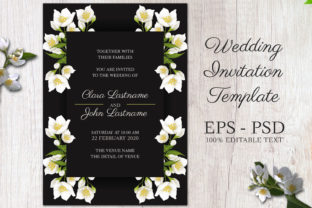
Selecting wedding stationery often involves balancing aesthetic preferences with practical constraints. The Jasmine Floral Wedding Invitation Card represents a specific niche within modern design: botanical minimalism that prioritizes elegance over complexity. Unlike heavy baroque styles or stark ultra-modern typography, this template utilizes the organic structure of jasmine flowers to frame essential information without overwhelming the reader. For couples and designers evaluating options, understanding the specific utility of this 5x7 inch format is crucial for determining if it aligns with both the event's tone and the production workflow.
This particular resource is distinguished by its technical accessibility. Providing both EPS CS6 and PSD CS6 editable files ensures compatibility across different design ecosystems. While many templates are locked into proprietary software or require subscription-based cloud platforms, this format adheres to industry-standard legacy versions. This distinction matters significantly for users who own perpetual licenses or work in environments where software updates are infrequent. The promise of 100% editable text further separates functional templates from decorative mockups, allowing for complete customization of names, dates, venues, and RSVP details without requiring advanced vector manipulation skills.
Distinguishing Characteristics of Jasmine Botanical Designs
The primary appeal of the Jasmine Floral Wedding Invitation Card lies in its visual restraint. Jasmine, as a design element, differs substantially from other popular wedding florals like peonies, roses, or eucalyptus. Peonies often demand significant color saturation and space due to their dense petal structure, which can compete with typography. Roses carry heavy cultural baggage and traditional connotations that may not suit a contemporary ceremony. Eucalyptus, while trendy, has become ubiquitous to the point of saturation.
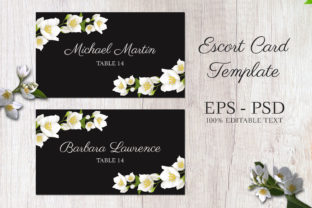
Jasmine offers a high-contrast alternative. Its small, white blooms and deep green foliage provide natural negative space. In a 5x7 inch layout, this allows the text to breathe. The flower acts as a border or corner accent rather than a background texture. This structural difference makes the Jasmine Floral Wedding Invitation Card particularly effective for couples who want floral elements but fear a cluttered or overly feminine aesthetic. It bridges the gap between garden-party whimsy and formal gallery-style minimalism, making it a versatile choice for mixed-format weddings that include both outdoor ceremonies and indoor receptions.
Technical Specifications and Workflow Compatibility
When comparing digital assets, file format dictates long-term usability. This template package includes two distinct file types, each serving a different segment of the user base:
- EPS CS6 Editable File: Encapsulated PostScript files are vector-based, meaning they scale infinitely without pixelation. This is the preferred format for professional print shops. If you plan to resize the invitation from 5x7 inches to a larger poster size for signage, or down to a thank-you card size, the EPS maintains crisp edges. CS6 compatibility ensures that users with older Adobe Illustrator versions can still open and modify the file without conversion errors.
- PSD CS6 Editable File: Photoshop files are raster-based and layer-dependent. This format is generally more intuitive for non-designers or those comfortable with photo editing rather than vector drawing. The layered structure allows users to toggle visibility, adjust opacity of the jasmine elements, or replace background colors easily. However, unlike the EPS, significant resizing may result in quality loss.
Evaluators should note that "CS6" refers to Creative Suite 6, released in 2012. While this guarantees broad backward compatibility, users on the latest Creative Cloud subscriptions should verify that their software opens legacy files correctly. Conversely, users strictly limited to free tools like Canva or GIMP may find these professional-grade files inaccessible without third-party converters, representing a significant tradeoff compared to web-native template alternatives.
Comparative Analysis: Template vs. Custom and Alternative Styles
Decision-making requires context. How does this specific jasmine template compare to other acquisition methods and aesthetic categories?
Pre-Made Templates vs. Bespoke Design
Hiring a custom stationer provides a unique, ground-up design tailored to a couple’s specific narrative. However, bespoke design typically commands a premium price and requires multiple revision rounds. The Jasmine Floral Wedding Invitation Card serves as a middle-ground solution. It provides professional-grade composition and typography pairing at a fraction of the cost. The tradeoff is exclusivity; other couples may use the same base asset. For privacy-conscious couples or those seeking total uniqueness, this is a limitation. For pragmatic planners allocating budget toward catering or photography, the template offers sufficient quality without the custom price tag.
Botanical Minimalism vs. Other Trending Aesthetics
Current market trends show a divergence between maximalist retro styles and clean modernism. Retro designs often utilize warm, muddy color palettes and serif fonts that can be difficult to read at smaller sizes. Ultra-modern designs sometimes feel sterile or corporate. The jasmine aesthetic occupies a functional center. It retains warmth through organic illustration but maintains readability through clean spacing. When comparing against watercolor templates, which can sometimes appear washed out in print, the line-art or flat-color style often associated with jasmine graphics tends to reproduce more consistently across different paper stocks and printing methods.
Assessing Fit: When This Template Is the Right Choice
No single design solution fits every scenario. Based on an evaluation of features and constraints, the Jasmine Floral Wedding Invitation Card is best suited for specific user profiles and event types.
Ideal Use Cases:
- DIY Print Management: Couples planning to use local print shops or online commercial printers will benefit from the standard 5x7 inch size and CMYK-ready file formats. The dimensions avoid custom cutting fees associated with non-standard sizes.
- Spring and Summer Weddings: The botanical motif aligns naturally with seasonal decor. However, unlike autumn leaves or winter berries, jasmine is evergreen in many climates, making it acceptable for year-round use without feeling seasonally dissonant.
- Multi-Cultural Ceremonies: Jasmine holds significance in numerous cultures across Asia, the Middle East, and the Mediterranean. Its inclusion can serve as a subtle nod to heritage without resorting to stereotypical iconography, making it a respectful and elegant choice for fusion weddings.
- Budget-Conscious Elegance: Users who need a polished look but lack the budget for letterpress or foil stamping can achieve perceived value through good design. The intricate detail of the jasmine illustration adds visual interest that compensates for simpler printing techniques like digital offset.
Situations Requiring Alternatives:
- Dark or Moody Themes: While jasmine can be recolored in PSD, its natural association is with light, white, and green. Adapting it to a black-tie, dark-academia, or gothic aesthetic may require extensive reworking that negates the time-saving benefits of a template.
- Non-Standard Sizes: If the wedding suite requires a square format or an oversized gatefold, starting with a 5x7 rectangular template may involve more restructuring than finding a purpose-built alternative.
- Software Limitations: Users without access to Adobe Illustrator or Photoshop CS6 or newer cannot utilize this product. Web-based editors or mobile apps would be necessary alternatives, albeit with lower resolution outputs.
Practical Considerations for Editing and Production
Owning an editable file is only the first step. Successful execution requires attention to technical details during the customization phase. Because the Jasmine Floral Wedding Invitation Card relies on the interplay between flora and type, maintaining hierarchy is essential. When editing the 100% editable text layers, users should resist the urge to increase font sizes beyond the designer’s original intent. The negative space around the jasmine elements is calculated to guide the eye; expanding text blocks can destroy this balance.
Color management also warrants careful evaluation. Screen displays use RGB light, while printing uses CMYK ink. The vibrant greens seen on a monitor may print duller or darker. Before committing to a full print run, it is advisable to order a physical proof. This is especially true for botanical designs where shade variations in leaves can shift dramatically between digital and physical mediums. Additionally, when modifying the EPS file, ensure that any new fonts are outlined or embedded before sending to a printer to prevent substitution errors that could ruin the typographic harmony.
Finally, consider the envelope pairing. A 5x7 inch invitation requires an A7 envelope. The jasmine design’s vertical orientation means the artwork should be centered appropriately so it isn’t obscured by the envelope flap or postal cancellation marks. Evaluating the final assembled suite—not just the digital file—ensures that the practical realities of mailing do not undermine the aesthetic investment made in selecting this specific template.