Evaluating Linear Small Floral Backgrounds for Textile and Surface Design
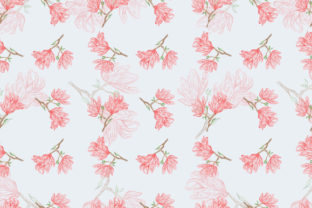
Selecting the appropriate surface pattern requires balancing aesthetic appeal with functional versatility. The linear small floral background, specifically featuring spring magnolia motifs, occupies a distinct niche within the broader category of botanical designs. Unlike dense, chaotic florals or large-scale statement prints, this style offers a structured yet organic visual rhythm. For designers, manufacturers, and homeowners comparing material options, understanding the specific characteristics of this linear arrangement is essential for determining its suitability for textiles, wallpapers, and digital backdrops. This evaluation explores the technical and aesthetic distinctions of this pattern type to assist in informed decision-making.
Defining the Linear Aesthetic in Botanical Patterns
The term "linear" in the context of a small floral background refers to the organizational structure of the motif rather than the shape of the flowers themselves. While magnolias are naturally rounded and voluminous, a linear design arranges these elements along vertical or horizontal axes, creating a sense of order and directionality. This distinguishes the pattern from scattered or tossed florals, where elements appear randomly distributed without a clear grid or flow.
This structural approach serves a dual purpose. Visually, it provides a calming repetition that prevents the pattern from feeling overwhelming, which is particularly important when covering large surface areas like wallpaper or upholstery fabric. Functionally, linear arrangements often align better with manufacturing processes, reducing waste during printing and cutting. When evaluating a seamless pattern with spring flowers, the linearity ensures that the repeat points are predictable, making installation on tiles or textile alignment significantly more manageable than with asymmetrical alternatives.
Comparing Vector EPS and Raster JPG Formats
A critical decision factor when acquiring resources like a linear small floral background is the file format. Resources typically include both vector EPS and raster JPG files, each serving different stages of the production workflow. Understanding the tradeoffs between these formats is necessary for professional application.
- Vector EPS Utility: The Encapsulated PostScript (EPS) format is mathematically defined, allowing for infinite scaling without pixelation. For textile designers, this is non-negotiable. If you intend to print the magnolia pattern on wide-format fabric or resize the motif for different product lines, the vector file preserves crisp edges at any dimension. It also allows for color separation and editing; if the vintage palette needs adjustment to match a specific Pantone reference, the vector paths can be recolored individually.
- Raster JPG Application: The JPG format is pixel-based and resolution-dependent. Its primary strength lies in immediate visualization and digital use. For web backdrops, social media content, or digital mockups where file size matters more than scalability, the JPG is superior. However, using a JPG for physical manufacturing carries risks. Enlarging a standard-resolution JPG for wallpaper printing will result in visible artifacts and blurring. The JPG should be viewed as a proofing tool or a final-output format for fixed-dimension digital assets, not a master production file.
Professionals should treat the EPS as the master asset and the JPG as a derivative. Choosing a resource that lacks the vector component severely limits future adaptability, locking the user into a fixed scale that may not suit evolving project requirements.
Versatility Across Textiles, Wallpaper, and Digital Media
The linear small floral background is frequently categorized as multi-purpose, but its performance varies across mediums. Evaluating fit requires looking beyond the visual preview to consider how the pattern interacts with physical texture and lighting.
Textile and Fabric Considerations
In fashion and soft furnishings, the scale of the magnolia motif relative to the garment or furniture piece is paramount. Small floral patterns excel in apparel because they read as a texture from a distance while revealing detail upon closer inspection. The linear arrangement adds a slimming or elongating effect to garments, unlike large circular motifs which can add visual bulk. For upholstery, the structured nature of the linear pattern helps hide seams and alignment issues better than rigid geometric grids, as the organic curves of the magnolia forgive minor registration shifts during sewing.
Wallpaper and Tile Applications
For interior surfaces, the "vintage" quality often associated with magnolia florals introduces warmth to modern spaces. However, users must evaluate contrast ratios. High-contrast linear patterns can create a vibrating effect on walls, leading to visual fatigue. Muted, tonal variations of this background are generally safer for residential interiors, whereas higher contrast versions may be appropriate for commercial accent walls or retail backdrops where dwell time is shorter. On tiles, the seamless nature of the pattern is vital; grout lines will interrupt the linear flow, so the pattern scale must be coordinated with tile dimensions to avoid awkward cropping at the edges.
Digital Backdrops and Texture
When used as a digital backdrop for photography or UI design, the linear small floral background acts as a non-distracting frame. Compared to solid colors, it adds depth; compared to complex illustrations, it maintains negative space for text overlay. The key evaluation metric here is opacity and saturation. Files intended for digital use often require post-processing to reduce visual weight, ensuring foreground content remains legible.
Strengths and Limitations Relative to Alternatives
No single pattern style solves every design problem. Comparing the linear small floral magnolia against other common categories reveals specific strengths and inherent limitations.
Strengths:
- Timelessness: Magnolia motifs bridge the gap between traditional vintage aesthetics and contemporary minimalism. They avoid the dated feel of 1980s country florals while retaining organic warmth lacking in pure geometrics.
- Directional Guidance: The linear aspect can be used strategically to influence spatial perception, making ceilings appear higher or corridors longer, a functional benefit absent in tossed prints.
- Production Efficiency: Seamless linear repeats are generally easier to color-match and register across rolls of fabric or paper than large-scale murals or non-repeating artistic panels.
Limitations and Tradeoffs:
- Rigidity Risk: If the linear spacing is too uniform, the pattern can appear mechanical or sterile. Users seeking a lush, garden-like abundance may find this style too disciplined.
- Scale Sensitivity: "Small" is subjective. A pattern that looks appropriately scaled on a screen may disappear when printed on heavy linen or look childish when blown up for wall covering. Always verify physical scale markers before committing to production.
- Style Specificity: While versatile, this pattern leans feminine and classic. It may clash with industrial, brutalist, or ultra-modern tech-forward aesthetics where organic curves introduce cognitive dissonance.
Decision Framework: When to Choose This Pattern
Selecting a linear small floral background should be based on specific project parameters rather than general preference. This pattern is likely the correct choice if your project meets several of the following criteria:
- You require a pattern that provides texture without dominating the composition.
- The end use involves directional elements, such as drapery, column wrapping, or vertical packaging.
- You need a master vector file to customize colors for multiple seasonal collections.
- The target audience appreciates heritage or vintage cues but expects modern execution and cleanliness.
- You are working with manufacturing constraints that favor consistent, predictable repeats over artistic randomness.
Conversely, readers should explore alternatives if the goal is to create a bold focal point, if the substrate has a heavy texture that will obscure fine linear details, or if the brand identity demands sharp, angular geometry. In such cases, a large-scale painterly floral or a structured tessellation may offer better ROI.
Technical Verification Before Acquisition
Before integrating any linear small floral background into a professional workflow, conduct due diligence on the asset's technical integrity. Verify that the seamless repeat is truly flawless by tiling the JPG at 100% zoom to check for visible seam lines or color banding. Confirm that the EPS file contains actual vector paths rather than embedded raster images, which is a common issue with low-quality stock resources. Additionally, assess the color profile; CMYK vectors are preferable for print production, while RGB is standard for digital-only applications. Ensuring these technical foundations are solid prevents costly rework and ensures the aesthetic vision translates accurately from screen to physical medium.